The Drawing 2 module has been enlightening, challenging, exciting and most of all it has been a fun journey of self-discovery.
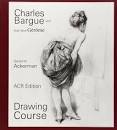
I have developed my own drawing practice by following my own interest in the traditional academic atelier style by working through the Charles Bargue Drawing Course which has helped my understanding of the human head and form. I then used this in my self-portraiture work in the parallel project. At the same time I have been interested in discovering new artists work that has influenced my own style such as Frank Auerbach’s charcoal and chalk self portrait in 1958 which is totally different in both method of application and emotional feeling and response. My own personal preference in artistic taste lies with representation, I love Caravaggio’s energy of composition and his ‘lightening flash’ imagery with his use of chiaroscuro. This contrast of light and dark was to be a strong influence in my self-portraiture work. Rembrandt’s painting which has a similar use of chiaroscuro to Caravaggio which I like, and I found Rembrandt’s drawings in ink to be a valuable source of inspiration where he captures details with a minimum amount of lines.
This led to me exploring the emotional aspect of linear work where I drew inspiration from Van Gogh’s drawing style which is akin to his bold painting style, and this appreciation also nourished my appreciation for Auerbach’s work. Researching artists like Jackson Pollock (who’s work I struggle to appreciate) has encouraged me to look at work with a fresh mind, and understanding his process of working at the canvas from all four sides in a frantic way gave me a better understanding for Frank Auerbach’s portrait of 1958 where he worked at it all day, and if not happy, he would rub it out and start over again from scratch the next day. This process was repeated so often that the surface had to be patched in places as it was worn through.
During the assignments I challenged my own ideas and conceptions about drawing practice in a traditional sense and I found myself doing a live four hour oil painting demonstration on the window sill of Glasgow’s branch of Cass Art which I filmed, I also painted a life size Aston Martin on our garage door as a piece that interacts with its environment. The exercise of drawing tree branches in assignment four probably shows how my style has allowed other artists work to influence my own drawing style. I discussed this with my tutor who was keen that I could somehow bring together all the elements that have worked pretty well for a final self portrait.
Key Influences


I decided to use some cardboard boxes which were taped together and prepared the surface with gesso before making a portrait using different images of my own self-portraits which all had different elements of line or tonal qualities. My parallel project was concerned with the use of line and tone, so the first stage was to establish some tonal qualities with oil paint, using just black and white and a few grey mid tones. The second video which could not be filmed until the first stage was dry a week later, was more about using pure black and white marks in a linear way on top of the tonal layer below. I had absolutely no idea how the portrait was going to turn out, I just kept on looking at the different reference images to inform the outcome, I was keen to allow the paint to run and drip in places, but I was controlling where the runs would happen. As I am working toward the painting degree, it was felt that doing a final self portrait in oil rather than charcoal would be an interesting way to finish the module.


KEY LEARNING OUTCOMES
Drawing does not have to be representational to be effective. Interesting things happen when you let your emotions react to what you are seeing. Improved understanding of the subject through repeated drawing of it. Being able to draw both abstractly and in a representational way brings an interesting dynamic to the drawing outcome.
I am looking forward to putting this new found enlightenment into my painting practice (rather like Christian Hook’s fragmented style) for Painting 2 and I will continue to find inspiration from looking at other artists work to inform my own developing practice.
 Neil C Drawing 2